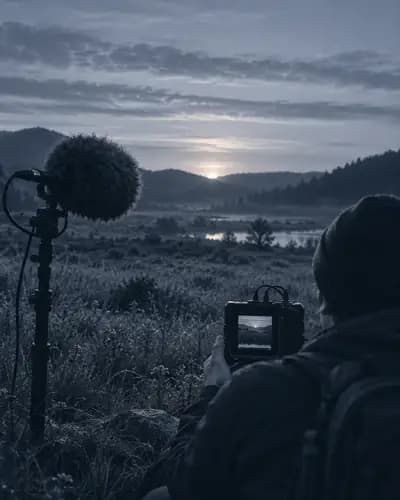
Get to know the place first
Preparation begins with access, the rules of the area and the possibility of staying quietly at a chosen point. It matters where we may stand, who owns the space and which restrictions apply. An interesting sound is not, by itself, permission to be there.
A plan provides reference points while leaving room to change a decision. If conditions call for moving away, shortening the work or leaving a location, that is a normal part of the process. A recording should not take priority over people's safety or the surrounding environment.
Do not create an event for the recorder
Our starting point is simple: observe what happens rather than provoke the desired moment. Attracting animals, playing calls to obtain a response or interfering with the life of a place is not a way to make a more compelling excerpt.
In inhabited spaces, care also means respecting the people nearby. Conversations and everyday activities do not automatically become material for publication. Privacy and the conditions for using a recording need consideration before there is a finished file.
Share what is actually known
A publication benefits from clear context: place, actual time, authorship and available information about the process. It gives a listener a point of reference and a reason to return with new questions. An editorial description can guide attention to details; provenance keeps the sound connected to the place and the people who worked on the recording.
This approach leaves room for sound and an honest conversation about it. Equipment serves that purpose; a model name alone cannot explain why we might want to return to a recording.