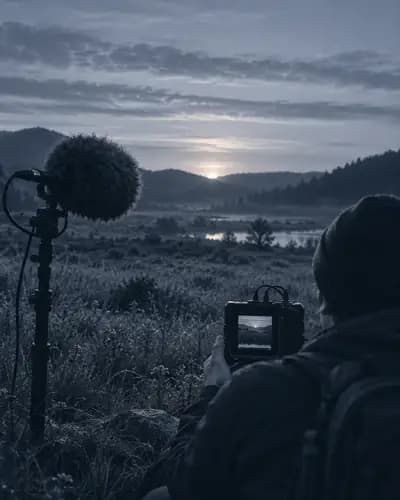
Begin with the whole
Choose a comfortable volume and stay with the recording for a few quiet minutes. First hear it as one landscape. Where do you sense movement? What feels close, and what remains beyond the foreground? There is no correct answer: your attention can take a different route each time.
If you want to jump straight to an obvious event, try waiting a little. A quiet background can help you notice a change when it comes. You do not need to turn the volume up to catch the faintest sound; comfort matters more than hearing everything at once.
Follow one thread
Now choose a brief sound. Follow how it arrives, repeats or makes room for something else. You do not have to decide what made it. You might notice only distance, direction, duration or the pause that follows.
Species names and timeline markers can wait until later. Let them be additional clues rather than a checklist of things you must find. Your first impression of a recording can remain without words.
Return to the landscape
After a few minutes, widen your attention again. The same background may feel different: layers that once blended together may stand apart. Try coming back another day and beginning with a different sound.
A field recording does not have to be completed from start to finish as an exercise. You can stay for a few minutes, take a break or choose another dawn. Leave yourself room to listen without having to explain everything immediately.